AI-Powered Life Coaches: Can AI Replace Human Mentors?
Introduction
Artificial intelligence (AI) is transforming various industries, from healthcare to finance, and now it’s making its way into personal development. AI-powered life coaches are emerging as digital mentors, offering personalized guidance, mental health support, and productivity enhancements. But can AI truly replace human mentors? Or is it merely a supplementary tool for self-improvement?
This article explores how AI life coaching works, its advantages and limitations, and whether AI can ever fully replace human mentors.
What is an AI-Powered Life Coach?
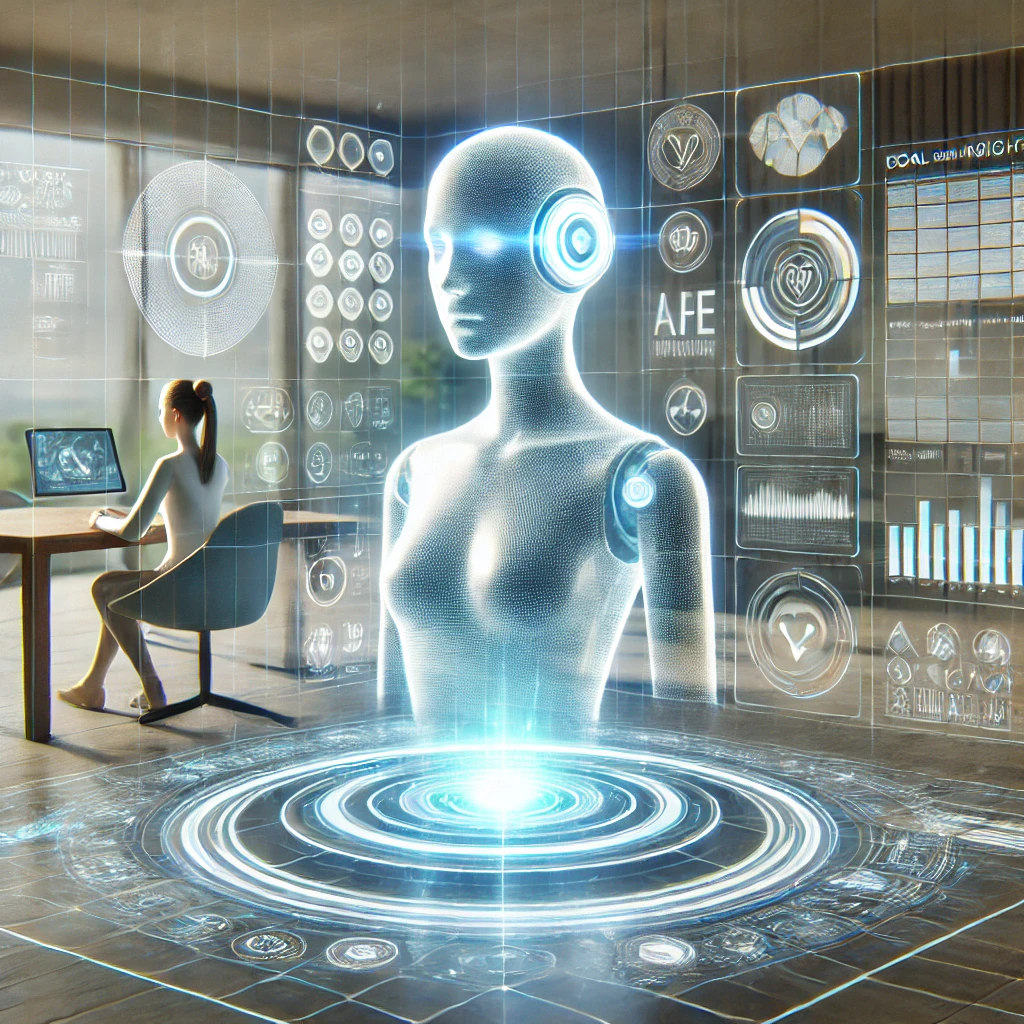
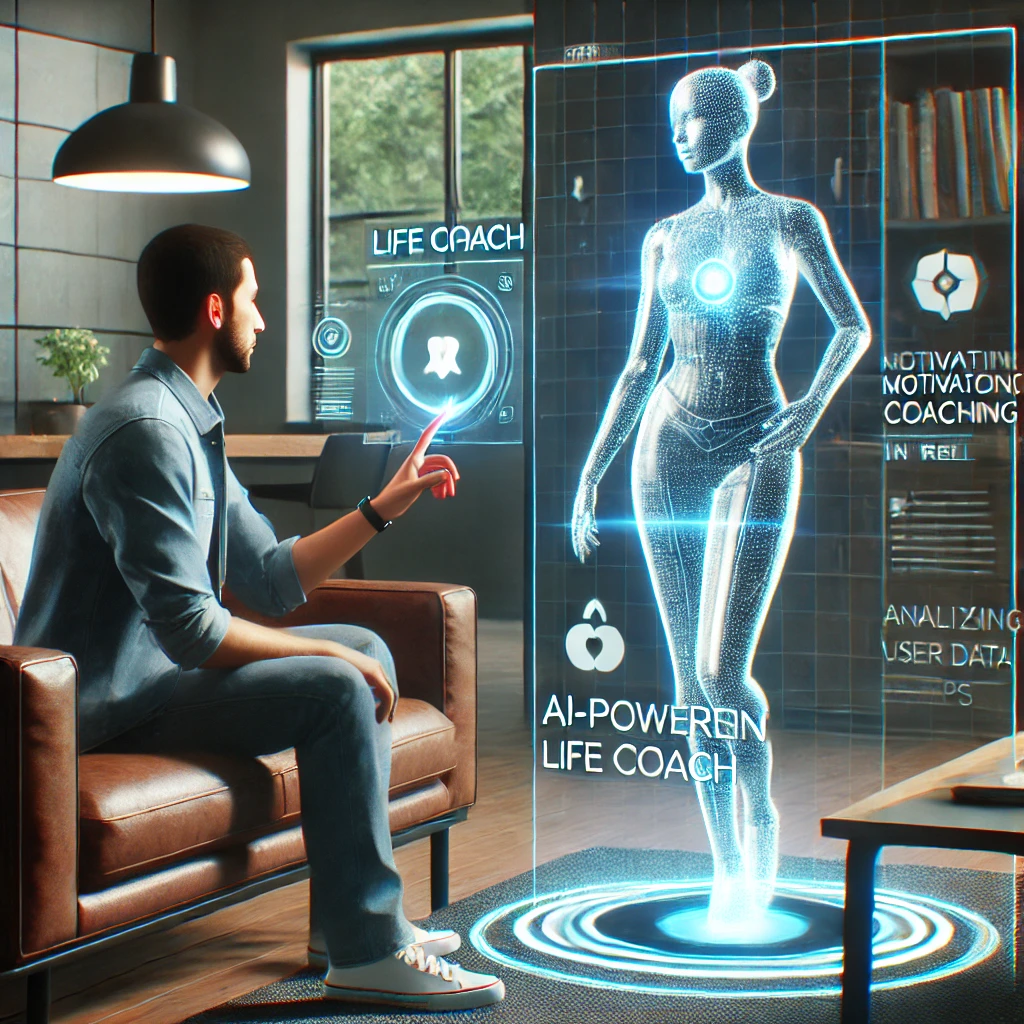
An AI-powered life coach is a digital mentor that uses artificial intelligence to provide personalized coaching, goal-setting strategies, and behavioral insights. These systems leverage:
- Natural Language Processing (NLP): AI understands and processes human conversations.
- Machine Learning (ML): AI adapts based on user preferences and behavioral patterns.
- Emotional AI (Affective Computing): Some AI models attempt to recognize and respond to human emotions.
- Data Analytics: AI collects and analyzes data to provide actionable insights.
🚀 Examples: AI coaching apps like Replika, Woebot, and BetterUp are already helping users with mental well-being, productivity, and personal development.
Benefits of AI Life Coaches
AI-powered life coaching offers numerous advantages that appeal to users looking for on-demand and personalized mentorship.
1. 24/7 Availability & Instant Feedback
Unlike human mentors, AI is available anytime, anywhere, providing immediate responses. ✅ No scheduling conflicts
✅ Instant guidance & reminders
✅ Consistency in advice
2. Affordability & Accessibility
Human coaches can be expensive, while AI-based solutions offer low-cost or even free alternatives. ✅ More affordable than traditional coaching
✅ Accessible globally, even in remote areas
✅ Removes barriers to self-improvement
3. Data-Driven Insights & Personalization
AI leverages big data and machine learning to offer: ✅ Personalized coaching plans based on behavioral analysis
✅ Progress tracking with measurable milestones
✅ Adaptive learning that improves over time
4. Non-Judgmental & Private Conversations
Many users feel more comfortable discussing personal struggles with an AI, free from societal judgments. ✅ AI provides a safe, non-judgmental space
✅ Helps introverted individuals express themselves
✅ Encourages mental well-being through unbiased guidance
Limitations of AI Life Coaches
Despite their benefits, AI life coaches have several limitations that highlight why human mentorship still plays a crucial role.
1. Lack of Genuine Human Empathy
AI can analyze emotions but cannot truly feel or understand human experiences. 🚫 Cannot offer deep emotional support like a human coach
🚫 Limited understanding of nuanced human struggles
2. Ethical & Privacy Concerns
AI collects and analyzes vast amounts of personal data, raising concerns about: 🚫 Data security and breaches
🚫 Potential misuse of sensitive information
🚫 Ethical concerns in AI decision-making
3. One-Size-Fits-All vs. Intuition
AI relies on algorithms, but human intuition and lived experiences remain irreplaceable. 🚫 Struggles to adapt to complex personal situations
🚫 Cannot replace real-life experiences & personal anecdotes
🚫 Lacks creative problem-solving abilities
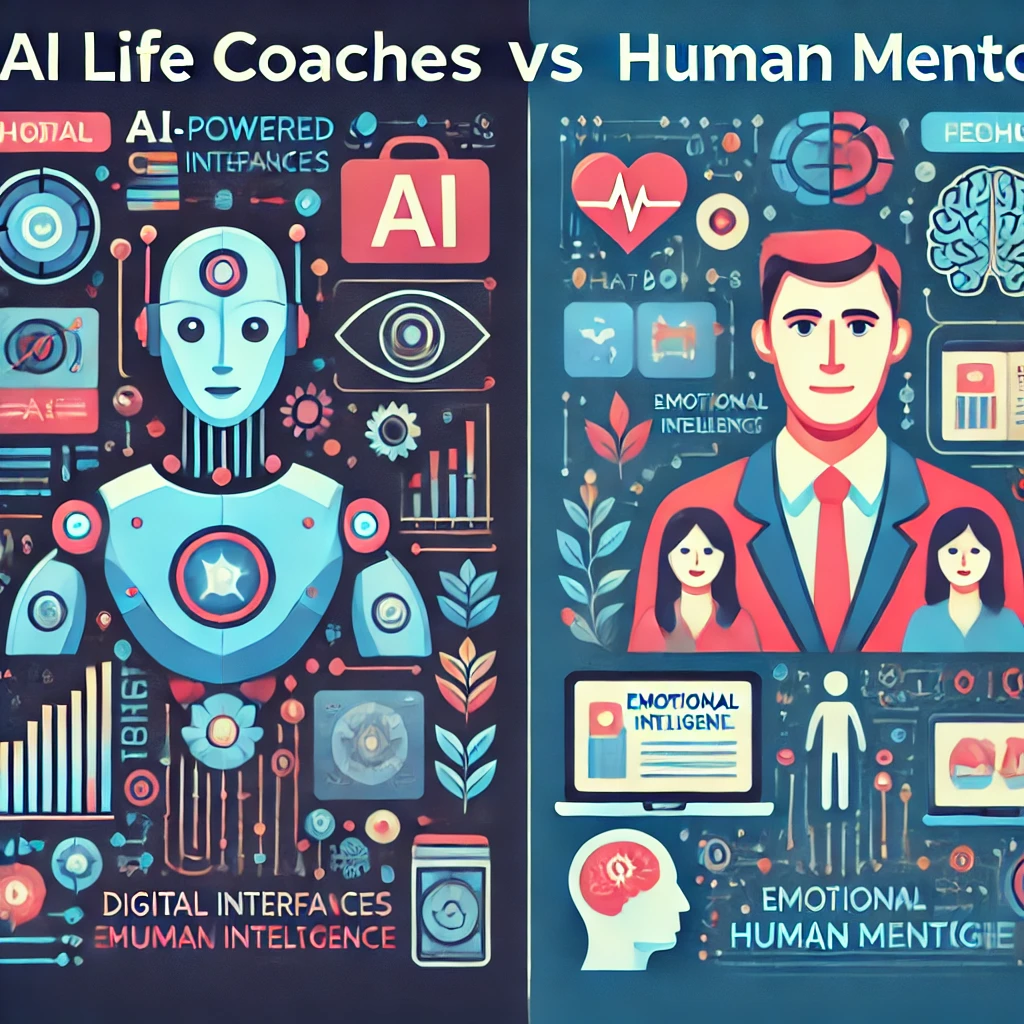
AI vs. Human Life Coaches: A Detailed Comparison
| Feature | AI Life Coaches | Human Life Coaches |
|---|---|---|
| Availability | 24/7, instant response | Limited availability, scheduled sessions |
| Cost | Affordable or free | Expensive, varies based on expertise |
| Personalization | Data-driven and adaptive | Based on intuition and real-world experience |
| Empathy & Emotional Support | Simulated empathy, lacks human connection | Deep emotional understanding & genuine empathy |
| Decision-Making Skills | Algorithm-based suggestions | Creative, intuitive problem-solving |
| Data Security Risks | High risk due to AI data storage | Confidential, direct human interaction |
Future of AI in Life Coaching
The future of AI-powered life coaching is promising, with advancements in emotional AI, personalization, and hybrid coaching models.
1. AI + Human Hybrid Coaching
AI can work alongside human mentors to enhance coaching experiences: ✅ AI handles repetitive tasks & data analysis
✅ Human coaches provide emotional intelligence & problem-solving
✅ Combined coaching leads to better client outcomes
2. Emotionally Intelligent AI
Future AI developments aim to better understand and respond to human emotions: ✅ Advanced sentiment analysis for deeper emotional recognition
✅ AI-generated therapeutic dialogues for mental well-being
✅ VR & AR-powered AI coaches for immersive coaching experiences
3. Ethical AI Coaching Frameworks
To address concerns, companies are working on ethical AI coaching frameworks: ✅ Stricter data privacy regulations
✅ Transparent AI decision-making processes
✅ Human oversight to prevent biased AI recommendations
Can AI Replace Human Mentors?
While AI-powered life coaches are revolutionizing personal development, they cannot fully replace human mentors—at least not yet. Instead, AI is best utilized as a supplementary tool that enhances traditional coaching.
✅ AI is ideal for: Task automation, goal tracking, data-driven insights, and personalized recommendations.
❌ AI struggles with: Genuine human connection, empathy, creativity, and deep problem-solving.
🚀 Final Thought: The future lies in a hybrid model, where AI complements human coaches, making mentorship more accessible, personalized, and effective.